The open DAM that fills the gap
A free, self-hostable digital asset management system that combines archival-grade metadata standards with modern local AI and a clean interface. The two things the market keeps separate, in one tool, installable in one command.
The state of DAM in 2026
A survey of the twenty systems that matter most for government, archival, and institutional buyers found a market split into two camps that never met. The full, citation-backed study is in RESEARCH.md.
Standards-rich heritage tools
ResourceSpace, DSpace, Archivematica, Preservica, Axiell. Run national archives, libraries, and museums.
- Deep standards: Dublin Core, METS, PREMIS, EAD, OAI-PMH, IIIF
- Real digital preservation
- But: hard installs, dated interfaces, little or no AI
AI-rich media libraries
Immich, PhotoPrism, and the commercial Bynder and Adobe. Great tagging and UX.
- Semantic search, auto-tagging, clean modern interfaces
- Easy to run (the open-source ones)
- But: no archival standards, or not free and self-hostable
How Keepstack compares
Keepstack next to seven leading systems across 21 capabilities. Keepstack was graded against its own source code, competitors against the research, then audited for overclaiming. It deliberately shows where Keepstack is only partial or still on the roadmap. Full detail in COMPARISON.md.
How it's built
One Python process, one SQLite database, one blob directory, four runtime dependencies. Full detail and more diagrams in ARCHITECTURE.md.
flowchart LR
  UI["Web client
(zero-build SPA)"] -->|HTTP| API["REST API"]
  API --> ING["Ingest"] & SRCH["Search"] & STD["Standards
DC / OAI-PMH / IIIF"] & AUTH["Auth + audit"]
  ING --> AI["AI (optional)"]
  ING --> DB[("SQLite + FTS5")] & BLOB[["Content-addressable
blob store"]]
  SRCH --> DB
  API --> BLOB
sequenceDiagram
  participant U as Client
  participant I as Ingest
  participant S as Storage
  participant DB as SQLite
  U->>I: upload file
  I->>S: hash + store (SHA-256)
  alt identical content exists
    S-->>I: reuse blob (deduped)
  else new content
    I->>DB: metadata + thumbnail + tags
    I->>DB: FTS index + embedding
  end
  I-->>U: asset ready
See it running
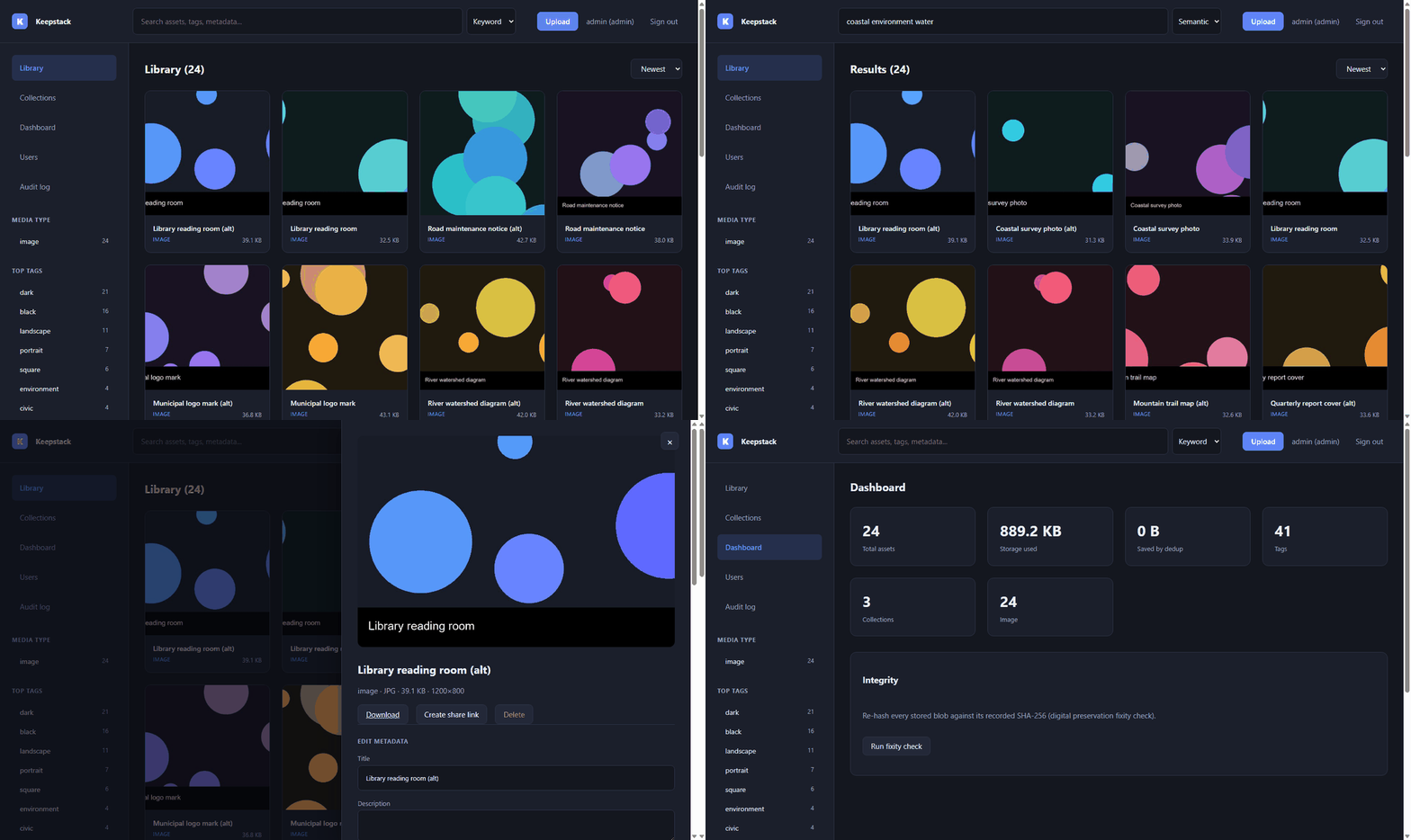
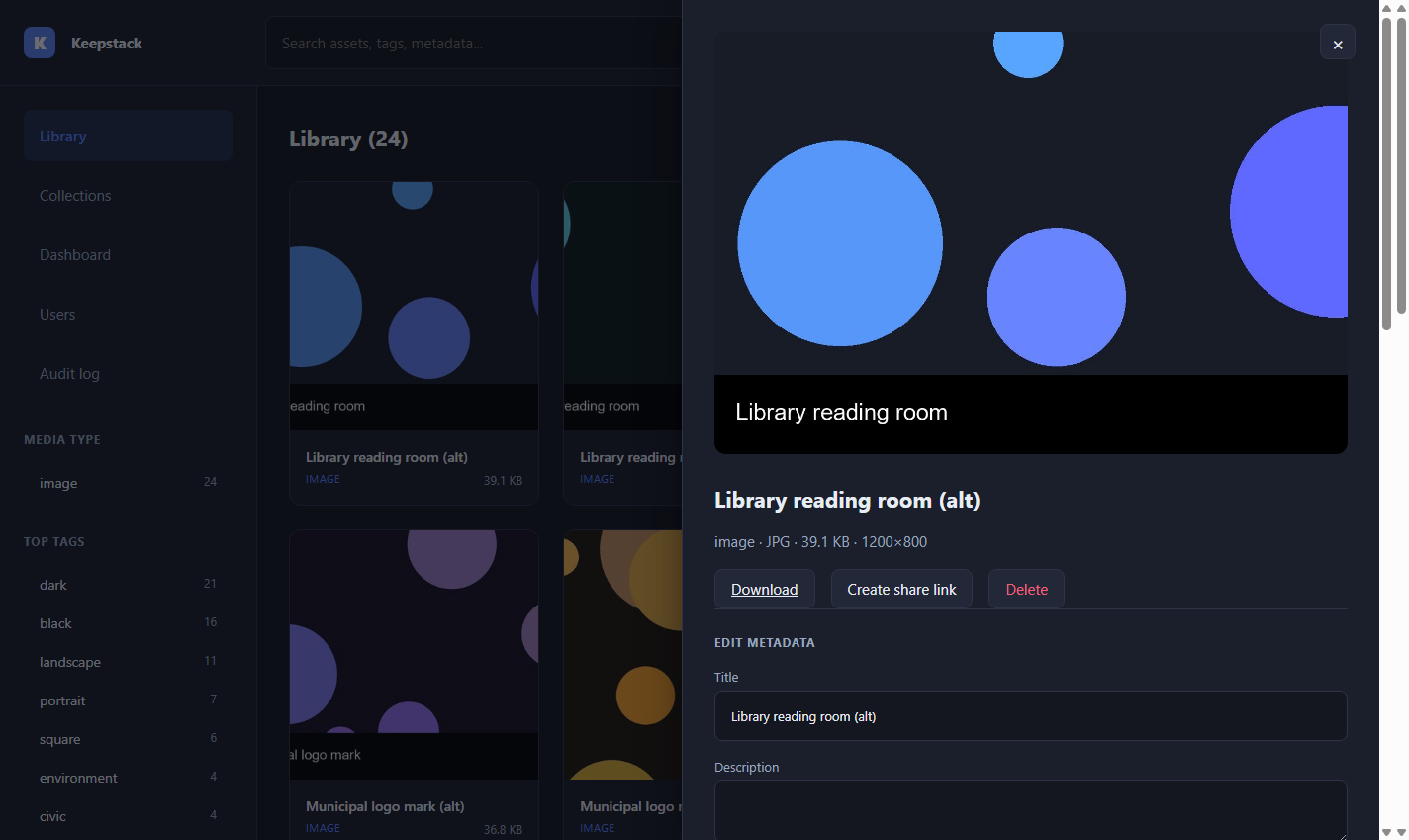
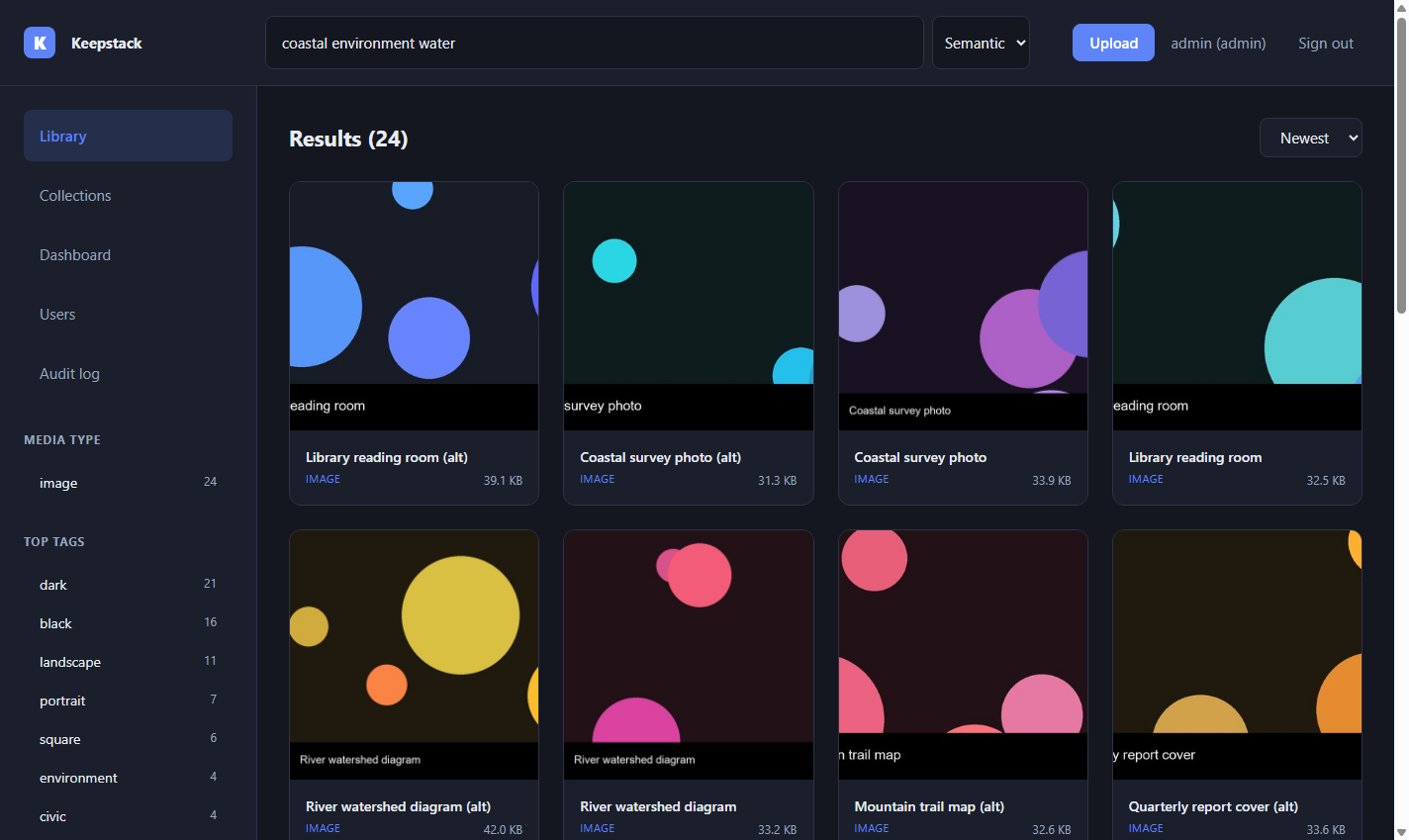
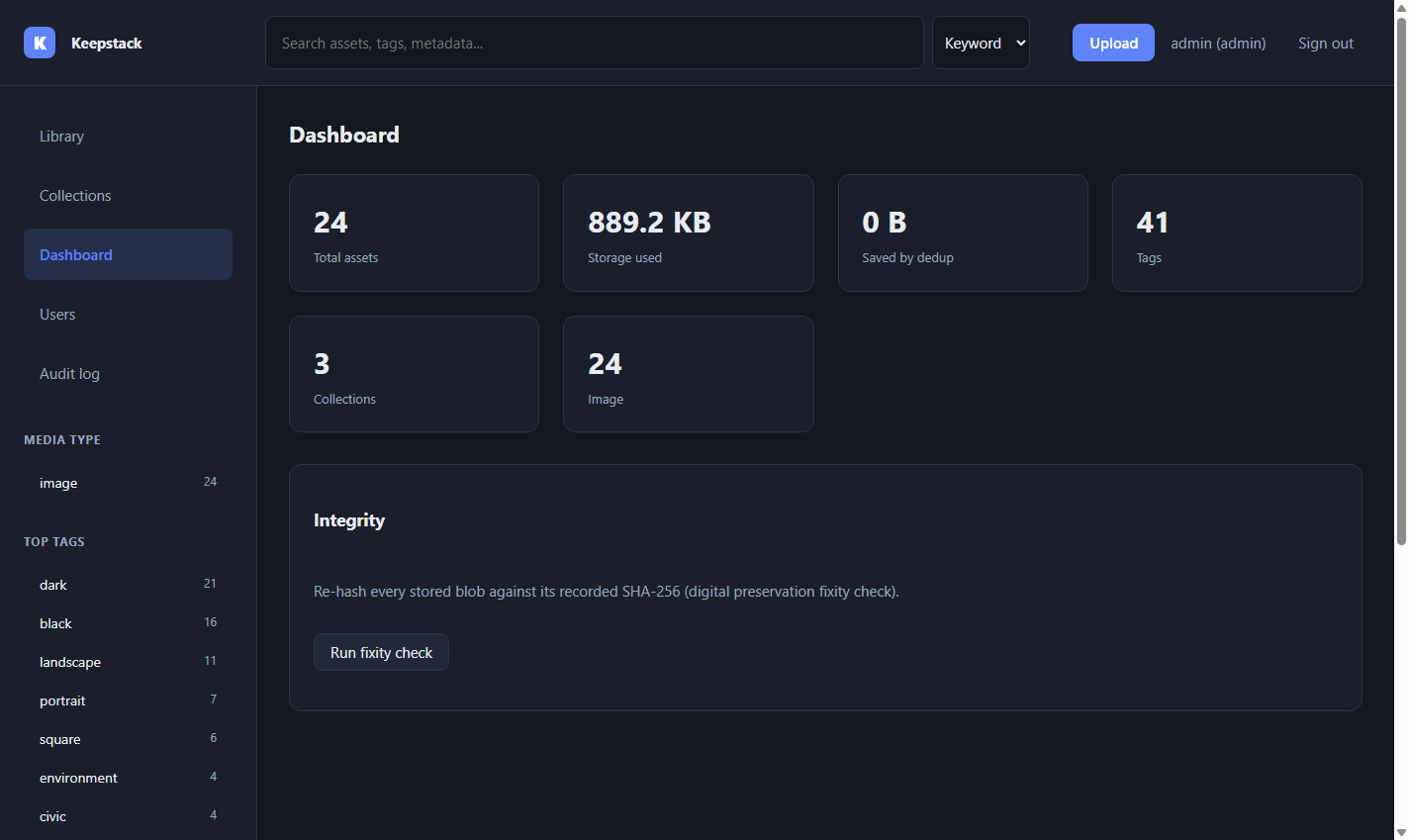
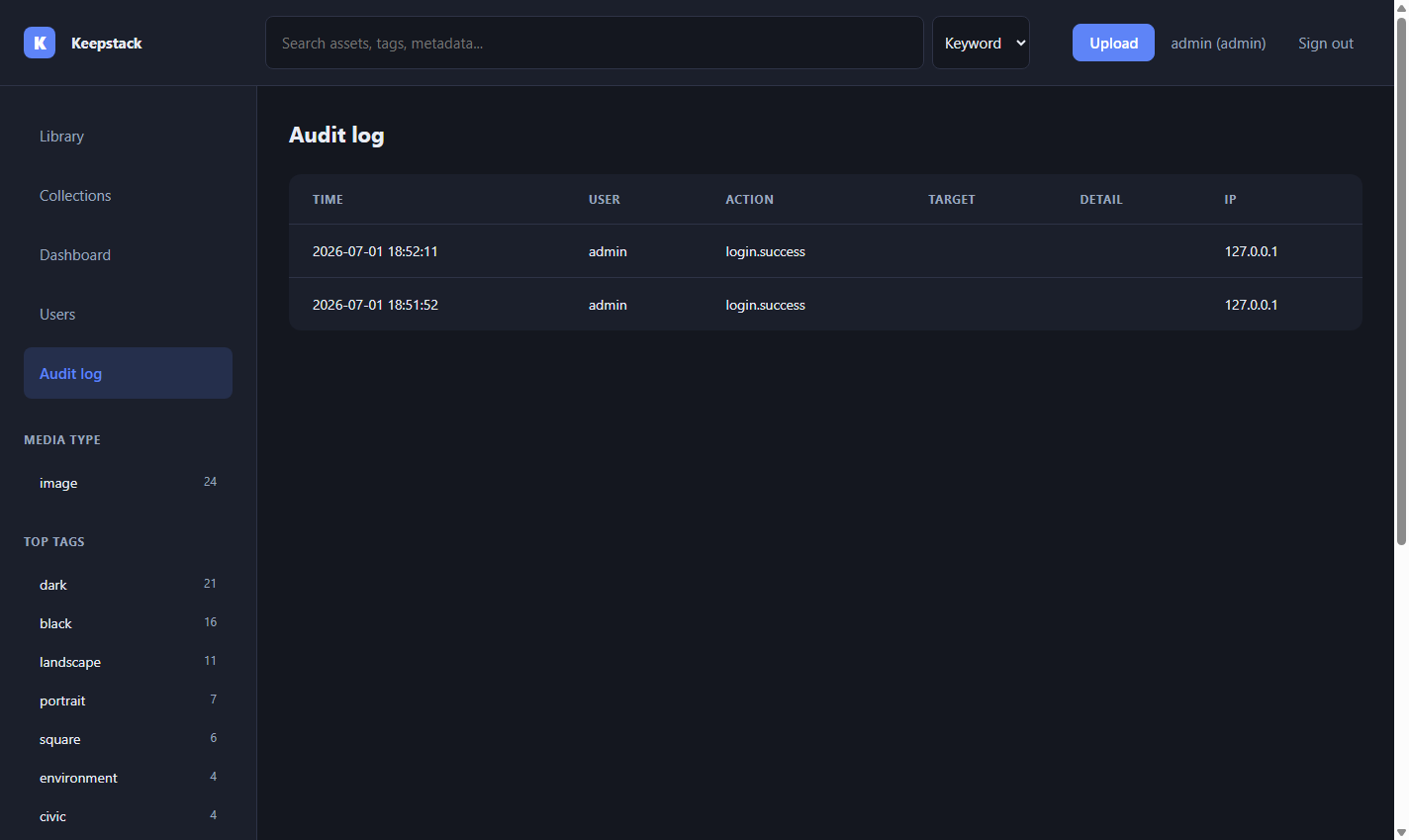
Real captures of the app, not mockups.
Read more
Everything is one click deep, nothing is dumped at once.